
Applied Epidemiology in Action
What I did in governmental public health, and why the system matters

While the extent of the most recent round of layoffs at the CDC is still unclear, what is certain is the widespread lack of understanding of what public health does on a day-to-day basis, and the continued dismantling of the public health system as a whole. I worked in multiple governmental public health agencies for a decade, and I am proud of what I and my colleagues did over those years, and proud of my federal colleagues who have been an important part of my career since the beginning.
The experiences I’m going to share here are a snapshot of what I did working as an epidemiologist and molecular biologist at a local health department, state health department, and a public health laboratory. These stories illustrate not just what public health workers do on a daily basis, but why the network connecting local, state, and federal public health agencies matters so much, and why weakening the federal layer damages the whole system.
Public Health Is a System That Never Sleeps
Before I jump into specific cases, one critical piece to know is that public health is a 24/7/365 system with intentional connections built within and between agencies at all levels. Just like clinical medicine, public health is a nonstop venture, and there is a running joke that phone calls that come in on Friday at 4 pm usually mean a weekend full of work. At any given time there is a web of public health professionals carrying cell phones (hopefully we’ve all moved on past the Blackberry I started with) and keeping them by their bedsides to spring into action if needed.
And what exactly do all of these on-call public health professionals do? They serve as a resource for clinicians who have someone in their office that was bitten by a bat and may need rabies prophylaxis (preventive shots), connect with experts at the CDC if a clinician suspects a patient has botulism, coordinate testing if a rare infection such as ‘brain-eating amoeba’ or Ebola is suspected. From local to state to CDC, everyone in the chain is ready and waiting to help you or your loved ones if the need arises.
I’m going to share a few stories here from my time in the field, and then wrap up with my thoughts on the state of the public health system in the US.
Foodborne Fiascos
Foodborne disease is far more than a stomachache. The wrong pathogen in the wrong population, such as Listeria in pregnant women or E. coli in the young, can be severe or even fatal. Some of the most challenging investigations involved patients that died of the illness. Trying to interview a grieving spouse, or a woman who lost her pregnancy due to listeriosis is a wrenching experience. Walking through that pain with them with compassion was humbling, as so often they took the time despite their agony to review grocery receipts, the contents of their refrigerator, and wrack their brains about every food consumed to help us pinpoint the cause and prevent further illnesses.
One particularly memorable outbreak was an outbreak of Salmonella infections associated with the herbal product Kratom. As we worked on the investigation, collaborating with the CDC and other states, we were able to identify Kratom as the source of the outbreak. This kind of multi-state coordination is impossible without federal partnership - no single local or state health department could have connected these dots alone.
During the same time period as the Salmonella outbreak there was a rally at the State Capitol by a group that was promoting keeping Kratom legal in the state. Two of us from the health department went to the rally and spoke with as many individuals as we could, informing them of the outbreak, answering their questions, and handing out our contact information. Had we sent a letter to the organizers it’s likely it would have been ignored, but by going out in person and introducing ourselves and taking the time to listen, we were able to be a much more trustworthy source of information.
Pertussis Peril
As a local health department epidemiologist, I routinely checked in with doctor’s offices when I received positive lab results for certain conditions, including pertussis (also known as whooping cough). During one of the phone calls I inquired about the patient treatment status and was told that the test had been negative. I informed them that the result received at the health department indicated the test was positive and they should check their results again. After a few minutes delay the doctor came back on the line and thanked me for the call, saying she would be following up immediately to initiate treatment.
Another time I called the mother of a young infant that tested positive for pertussis, and in speaking to her learned that they lived in a multi-generational household that contained elderly individuals as well as a pregnant woman. There was a language barrier which made it difficult to communicate fully, but through coordination with the physician we were able to do a three-way call with myself from the health department, the language line translating service, and the physician who had the family in her office. Through this we were able to obtain a listing of all the close contacts, evaluate the need for preventive antibiotics, and get those medications ordered.
These aren’t dramatic interventions, but they are examples of what I did on a routine basis - talking to individuals, connecting with physicians, and coordinating resources to promote health and slow the spread of serious illness across the community.
Enterovirus Emergency
Enteroviruses played a big part of my early career, first through the emergence of severe hand, foot and mouth disease (HFMD) in 2012 caused by Coxsackievirus A6 (CVA6), followed shortly after by the outbreak of enterovirus D68 in 2014. My first investigation occurred at a local college - it was highly unusual to see HFMD in young adults as it typically affects preschoolers. In addition the cases were presenting more severely than usual, and included unusual symptoms such as the loss of fingernails and toenails and peeling skin on the hands and feet.
This unusual population and presentation made the situation important to investigate, and thankfully the CDC lab was available to provide testing to identify which specific enterovirus was causing the outbreak. It turned out to be Coxsackievirus A6 (CVA6), where typically HFMD in the US is caused by Coxsackievirus A16 (CVA16). This explained the differences in symptoms and why young adults were affected (they likely had CVA16 as kids, not CVA6). By learning what was going around in the community, we were able to communicate with medical providers so they could properly diagnose based on the unique presentation of symptoms associated with CVA6.
Without CDC laboratory capacity and expertise, we never would have solved this puzzle or been able to give clinicians the information they needed. With new or extremely rare pathogens there is no incentive for commercial labs to develop testing capabilities, and even maintaining the capacity in every state lab doesn’t make sense. Having the CDC lab available to serve as that specialist lab is critical.
The Daily Reality
Working in public health is at times gritty, often heart-wrenching, and always ultimately rewarding. Working in this field means you are coming alongside individuals and communities when they are experiencing the worst, and your job is to compassionately listen, provide sound advice, and offer support.
I have swabbed chicken cloacas, sampled seawater and oysters, and bought myself waders at Goodwill so I could tromp around in a lake trying to catch snails that harbor the parasite that causes swimmer’s itch. I have sat for hours opening stool samples (yes, that’s as glamorous as it sounds) and testing them for noroviruses, and stayed in the lab until 11 pm to push through and complete testing on a child with acute flaccid myelitis (sudden muscle weakness that can happen as a result of certain viral infections).
I am one of many, and my stories are not unique. Public health workers are friends, neighbors, and people who entered the profession with a desire to protect the health of their community.
Why the System Matters
Across the country from local to state to federal, public health professionals are standing by at all times, part of an increasingly fragile system built to protect the wellbeing of all. If your child is one of the unlucky few to be infected with raccoon roundworm, or your family becomes ill after eating contaminated food from a restaurant, public health will be there to provide advice, connect your doctor to the right experts, and work to prevent that same misfortune from happening to others.
But none of this work happens in a vacuum. As my stories show, the CDC was essential when we needed to identify an emerging Coxsackievirus and coordinate across states to crack the Kratom Salmonella outbreak. While much of the front-line public health work happens at the local and state level, the CDC is a key partner in developing guidelines, coordinating across multi-state outbreaks, providing specialized laboratory testing, and interfacing with international colleagues on cross-border outbreaks.
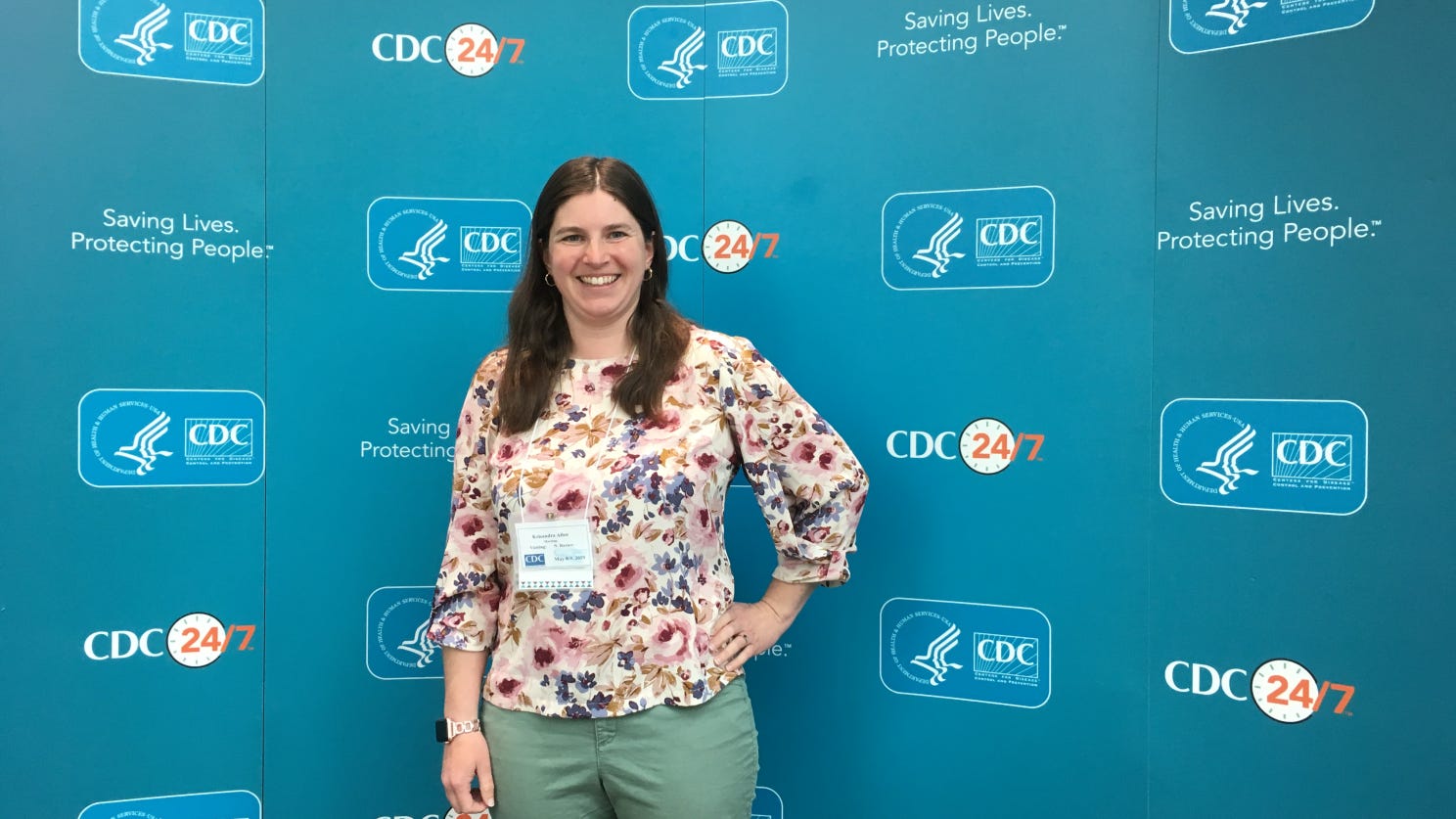
On a more personal level, CDC has been instrumental in my career development, supporting me to attend trainings at the Atlanta headquarters twice (yes, the same one where gunfire rang out in August) - once for hands on laboratory training on norovirus sequencing, and once to attend the Advanced Molecular Detection academy to improve my skills in applying advanced laboratory techniques to public health problems. Losing critical subject matter experts at the CDC means that state and local public health leaders have fewer opportunities to learn critical skills that will help them better serve their communities.
Cutting people out of the system without any consideration of the system as a whole will have cascading consequences. Dismantling the federal public health system will have tangible effects on the ability for local and state public health workers to do their work effectively and efficiently, and ultimately, on the health and safety of everyone in this country.